Think about our modern day life. There are so many things that make our lives so much easier than those of our ancestors. It seems that every new invention is designed to make life easier for us. Or at least the infomercial for that product would like to have you believe that. Some of today's "must haves" to live the american dream include things such as the personal computer which comes in all shapes and sizes, the television that can bring an image from thousands of miles away to our living room in a matter of seconds and the modern day wonder that I would like to focus on is the Automobile.
Transportation is and always has been an essential of human life. There are many things which rely on our ability to get from one place to another. For example, I live in Caldwell Idaho and attend school at the College of Western Idaho. I have to commute from my home to my campus and according to maps.google.com this is a distance of 28.1 miles and should take roughly 34 minutes to make this commute. This is an essential part of my life at this time.
Time taken to travel a distance is just as important (to some it is more important) as arriving safely. 26.22 miles is a very well-known distance. It is the distance of the Marathon. The Marathon has its basis in Greek history. It is the distance from the Battle of Marathon to Athens Greece and was run by Pheidippides to announce the victory of the Greeks over the Persians in the year 490 BC. For the sake of contrast I just ask you one thing. How long would it take you to run or walk 26.22 miles? The world record is 2 hours 6 minutes and 32 seconds. Not too many of us are going to be able to do it in anywhere near that amount of time.

I ran cross country when I was in High School. Most people figured I would have played football with my heritage, size and build but I did not. A cross-country race is one of two distances. It is either 3 miles or 5 km (roughly 3.2 miles). In Montana we run the 3 mile version. When I was 17 my best time at this race was 18:32 or 6:10.6 per mile. My Best 2 mile was 11:58 or 5:59 per mile and my best 1 mile time was 5 minutes and 48 seconds. I was never slow but I wasn’t ever the fastest either. But I need to demonstrate one fact. The further we go the more time it takes to cover the same amount of ground. The same is true with any animal. Based off of these numbers how long would it take me to run to college? I’m no mathematician but my guess would be somewhere around 3 hours and 45 minutes if I were in tip-top shape and when I got there I would have no energy left.
Now how does 3 hours and 45 minutes, stinky, sweaty and dead tired after running 26.22 miles sound compared to driving for 34 minutes in a smooth riding, air conditioned or heated automobile? I would say that there’s not much of a comparison between the two. Wouldn’t you?
Right now you may be wondering “what does any of this have to do with the automobile?” I simply wanted to point out that the automobile fulfills several needs of us the human consumers. We need to be able to go from point A to point B, get to our destination in a reasonable amount of time, get there safely and have the energy to perform our labors when we get there. The automobile was designed to accomplish all of these and continues to improve its habilitation of those needs.
The word automobile itself is based in the Greek language. Auto meaning “self” and mobile meaning “movable”(Wikipedia.com “Automobile”). Thus automobile means self-moving gives a very accurate description of what on should expect. There are several components of an automobile that are required to make this possible. I will cover some of the ways used by today’s Automobile.

The OTTO four stroke engine was developed by Nikolaus Otto in 1876. This four stroke engine is the basis of the engines that are still used in cars today. It is called a “four stroke” or “four cycle” engine because there are four stages used in converting combustion energy into a usable circular motion. These stages or “cycles” are as follows, The Intake Stroke, Compression Stroke, Power Stroke and Exhaust Stroke. All four cycle engines use these stages. Some engines have different ways of performing the above listed but all adhere to and keep these four stages. This is the type of engine used in most modern automobiles today but in 1900 only 22% of all automobiles used this method. Back then 38% were Electric and 40% were steam powered.

Advancements during the beginning of the automobile’s early days were slow and hard due to technological disadvantage. It wasn’t until 1885 that the first automobile was actually built and they were extremely scarce and un-available to the general public. Eleven years later (1896) Henry Ford built his car the quadricycle. It was equally un-available. In 1902 Oldsmobile produced the first affordable automobile on a large scale basis but it wasn’t until 1908 that the automobile started becoming readily available. That was the year that General Motors was formed and is also the year that Henry Ford introduced the Model T.

Advancements came by leaps and bounds throughout the early stages of manufacture for the automobile. Up until 1914 all cars were either made of or at least contained wood. The electric starter was not introduced until 1912. Before that users had to crank engines over by hand. Hydraulic brakes hit the scene in 1922 and did away with lever operated brakes. In 1940 the first fully automatic transmission was introduced. Computers were starting to be used with cars in 1982 and then in 1996 OBD-II were introduced.

In early automobiles most of the components required to make an automobile run and drive was strictly mechanical and required a lot of guess work. My favorite example would be the carburetor. The carburetor was the method used to meter fuel and air into the engine. I actually prefer carburetors to many of the systems used today but that is only because I have a little more understanding than “the average bear” (yogi bear) But in principle the carburetor would meter the amount of fuel and air based on “if the hole is this big then it will allow this much fuel.” The problem is that there are far too many variables for that to be remotely accurate.

In the early 1980’s Manufacturers began changing over from “strictly mechanical” to “computer controlled.” This included doing away with my friend the carburetor and putting in fuel injection. Fuel injection then metered the fuel and air mixture based on the readings that certain sensors in the automobile relayed to the computer. Many of these early computer controlled systems were as basic as could be and more trouble than they were worth as many new products often are. They did however teach automobile manufacturers how to do things much better.

In 1996 OBD-II or On Board Diagnostics-II was required of all new Automobiles in the United States and was adopted by almost all the countries in the world. In order to be OBD-II compliant an automobile must have several things. I will name the most important for the sake of understanding how a modern automobile works. The automobile must no longer just meter the fuel and air but with OBD-II it has to be able to monitor it as well. From these monitors it is also able to change the metering for optimum performance and to limit poisonous gas emissions.

In order to monitor and meter the fuel and air in the engine several systems are used. The most common is a Mass Air Flow type. The mass air flow sensor sends a reading to the computer that lets it know how much air is entering the engine. All of our modern vehicles use oxygen sensors in the exhaust pipes of our vehicles. These sensors are used to monitor the amount of oxygen that is leaving our engine. Based on these readings the computer can then determine whether more or less fuel is needed for optimum conditions. The fuel metering is accomplished by the computer telling the fuel injectors to stay open for a varied amount of time depending on how much fuel is needed. If there is an error with either system then the computer recognizes that the information is out of specifications and then illuminates the famous “Check Engine” light.

There are many more systems on today’s automobile. These are systems that smooth the ride of the car over bumpy terrains and always keep the car level. There are transmissions that never shift but instead use computer controlled continuously variable gears to keep the engine at its optimum operating range. The modern automobile is also able to help you maintain control on icy roads, wet roads and even off road.
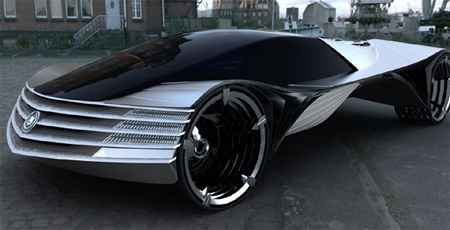
There are several types of automobiles on the road today as well. There are sports cars capable of going over 200 miles per hour, Buses capable of hauling 50+ people, Economy cars that can get 80 miles to the gallon or more. Not bad for only 126 years right? There are literally automobiles to fit anyone’s situation and things are only getting better.

No comments:
Post a Comment